International expansion
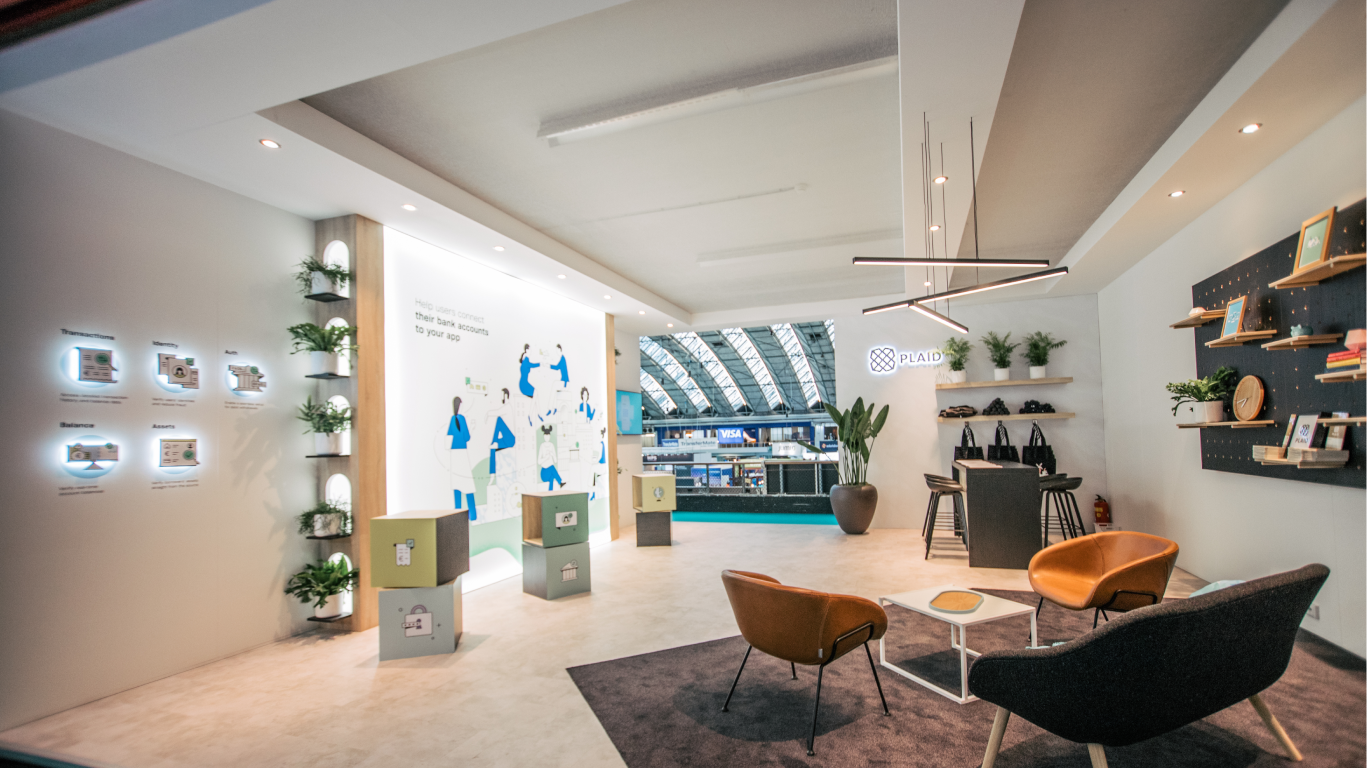
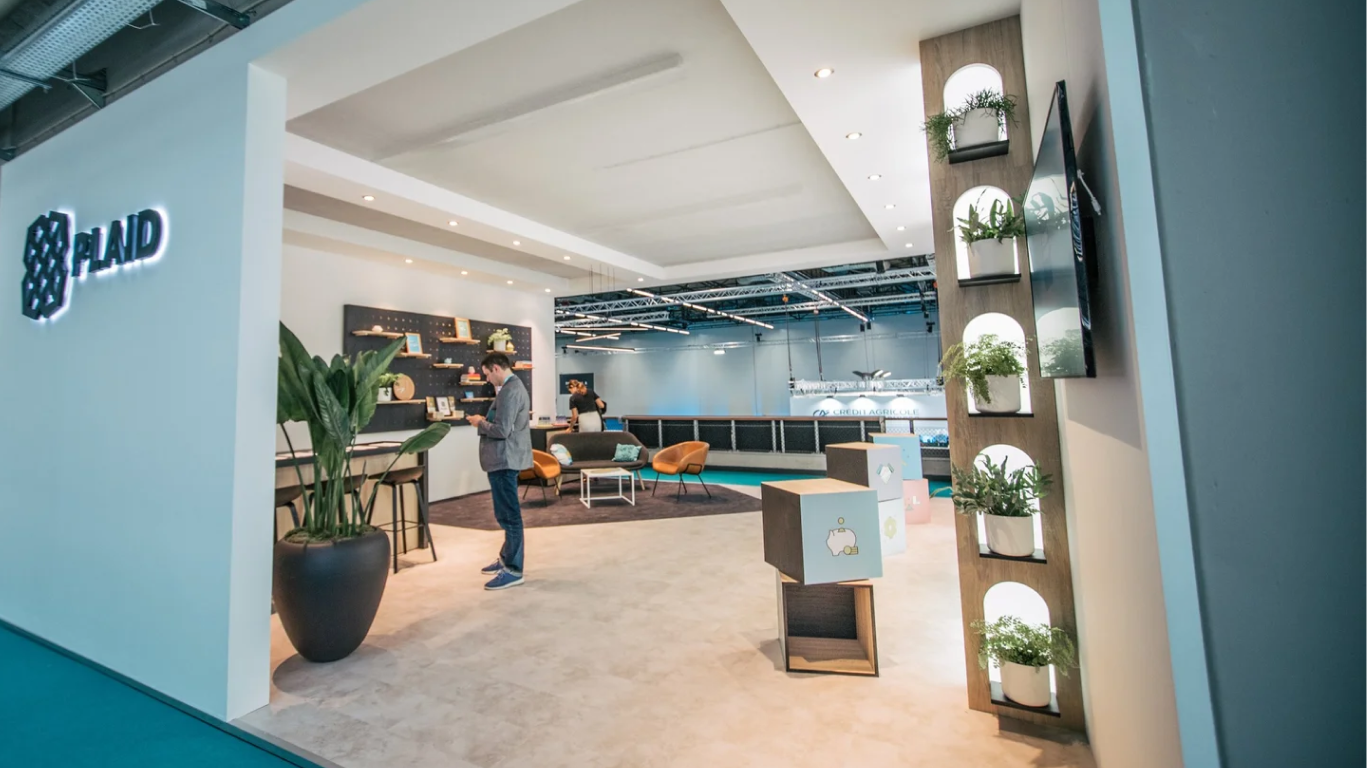
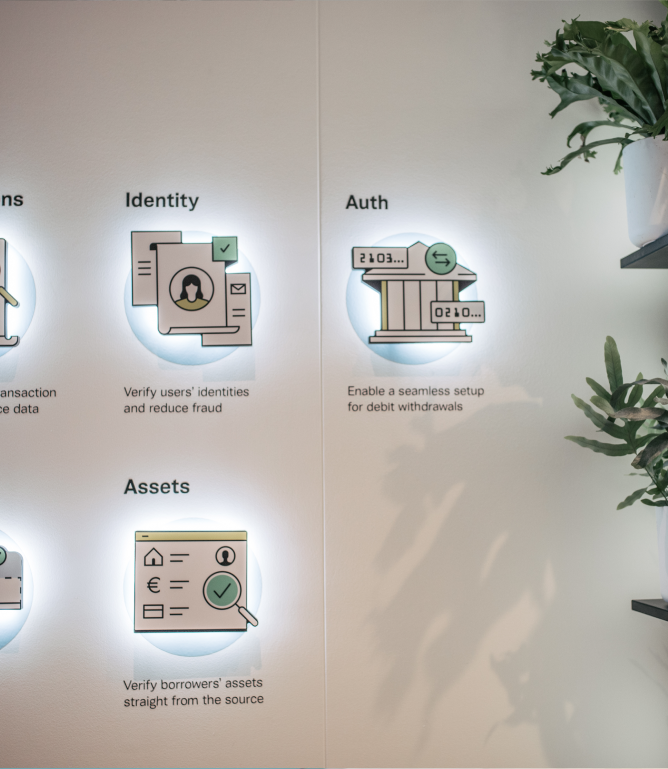
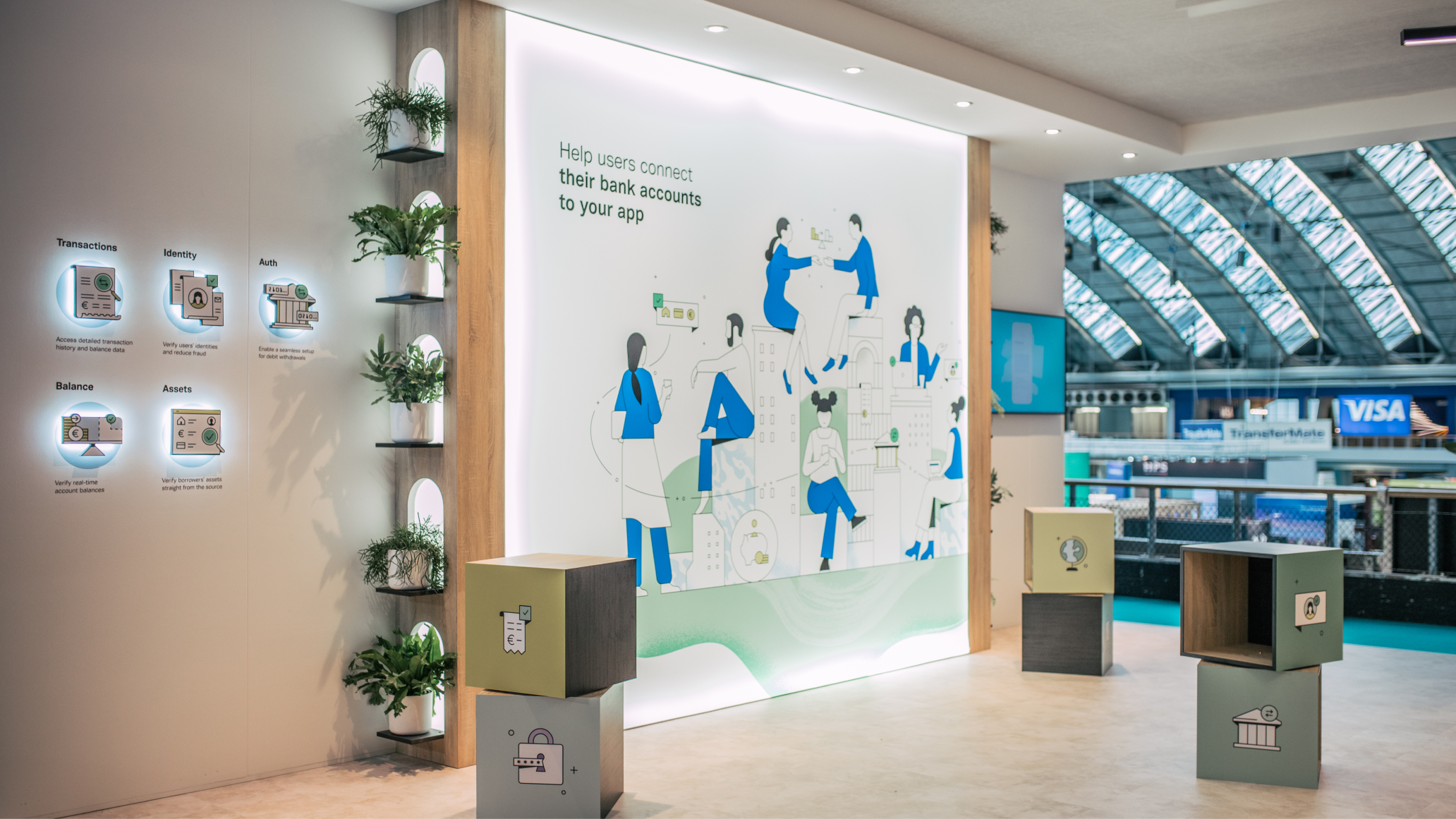
In early 2019, Plaid was ready to expand to Europe. To build our brand presence in a new market, we wanted to make a big splash at Money 20/20 in Amsterdam—one of the biggest events in fintech. The goals were threefold: create a memorable, elevated experience reflecting Plaid’s commitment to quality; generate leads without feeling like a lead gen event; and translate our (then-new) visual identity into three dimensions, establishing a reusable event toolkit in the process.
Credits
Brand design lead: Elena Gil-Chang
Brand design support: Vince Sacco
Initial exploration
As lead designer, I explored two directions. The first leaned into Plaid’s brand personality traits—Bright, Aware, Tenacious, Supportive—using unexpected splashes of color and three-dimensional building blocks to feel inspiring and imply interactivity. The second took a warmer, more inviting angle: greenery to imply growth, natural materials like wood and leather, and cozier lounge areas built for easy conversation. We landed, predictably, on a combination of both.
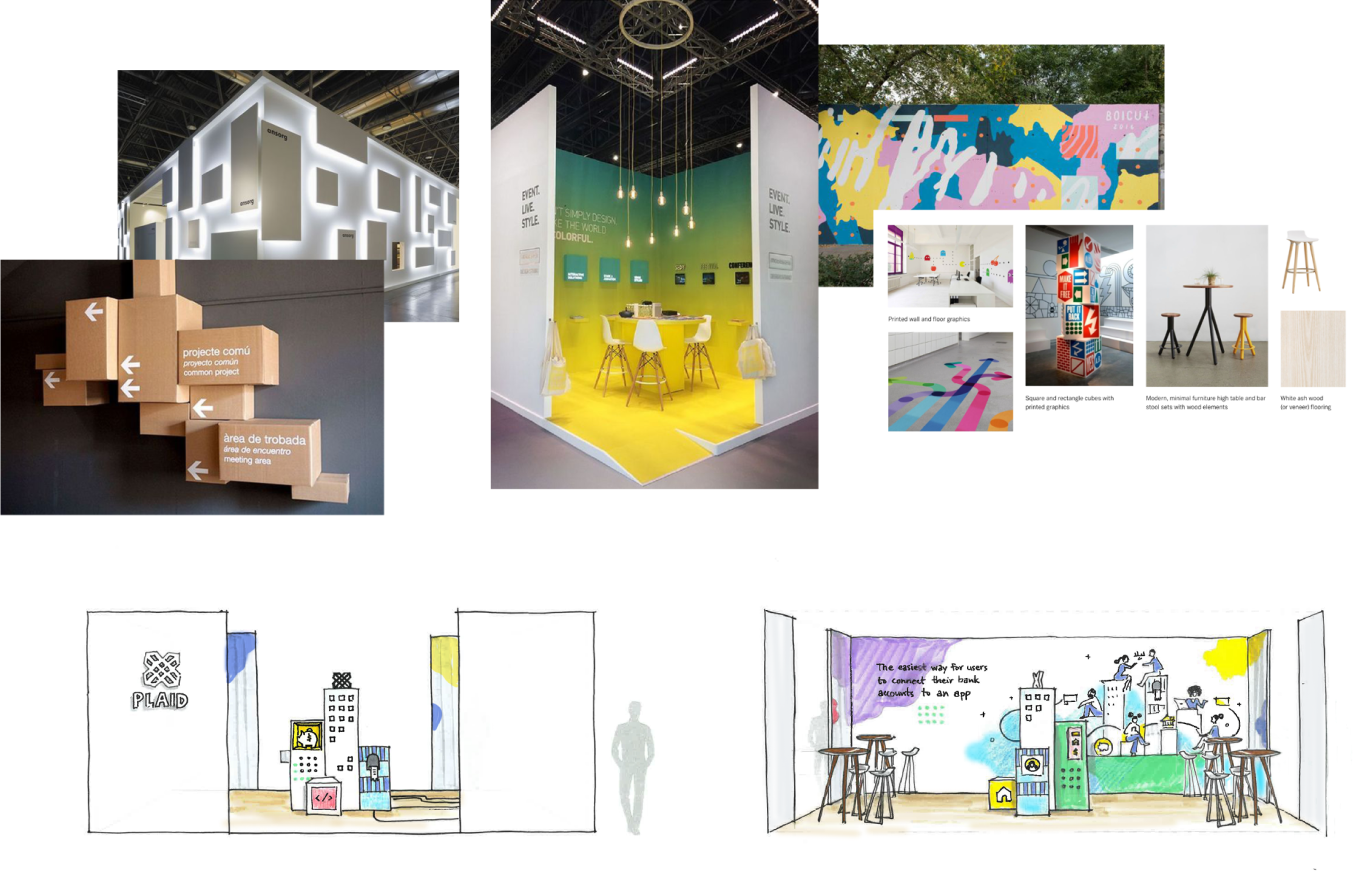
Concept 1: The future of fintech is bright
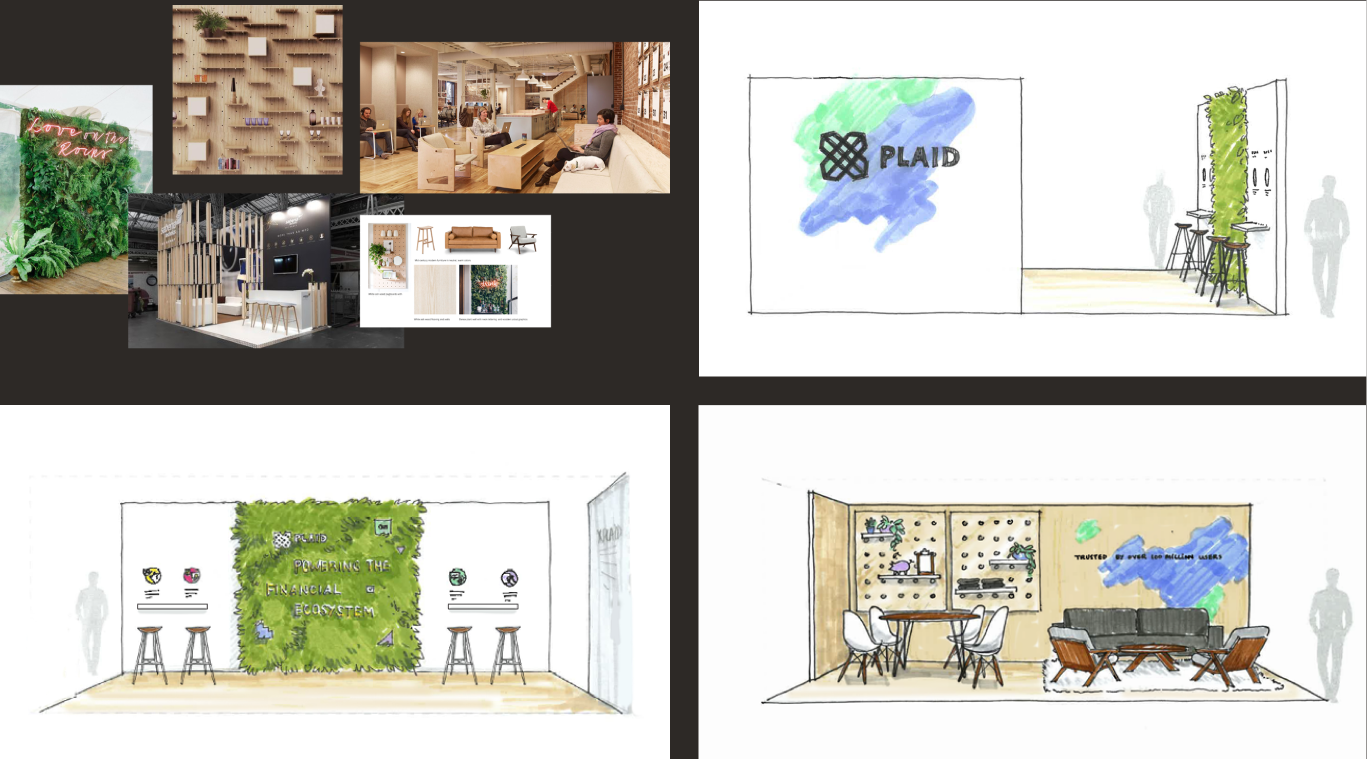
Concept 2: We’re the partners that’ll support you
Implementation and close partnership with fabrication partners
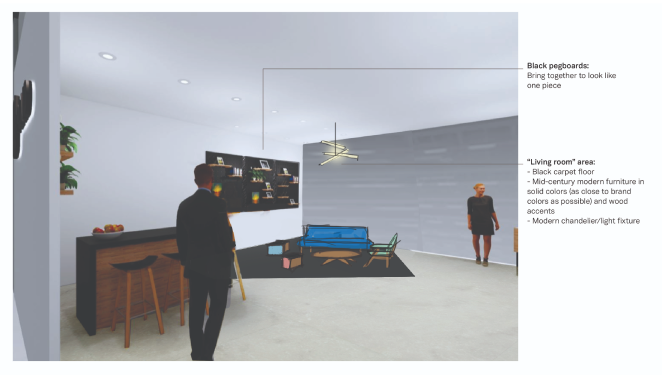
Over two months, I worked closely with our fabricator on the ground in Amsterdam—reviewing weekly 3D renderings, providing feedback, and adjusting details to make sure the buildout met our standards. Coordinating across time zones with vendors while managing stakeholder alignment internally made this as much a production challenge as a design one.
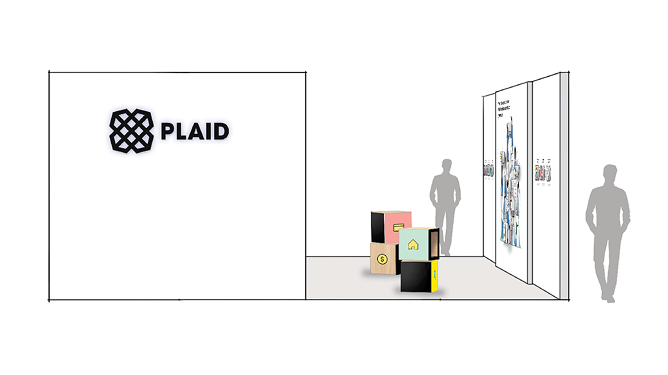
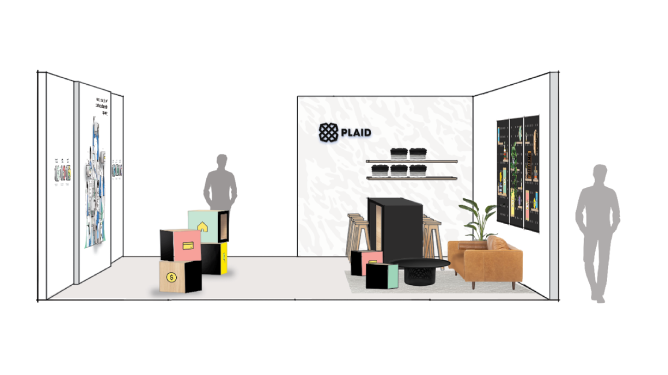
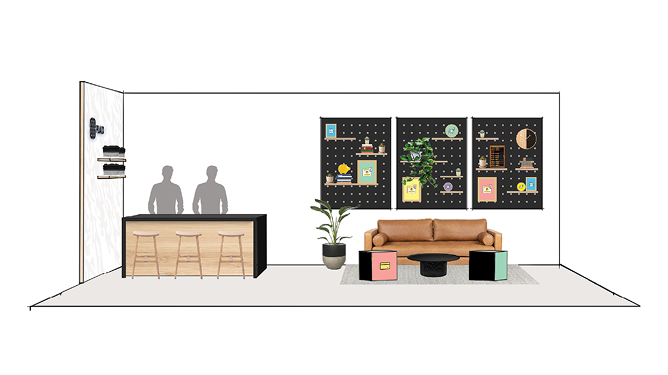
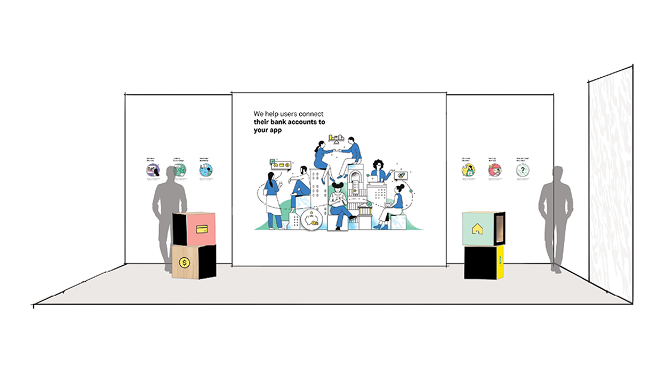
Refined sketches and feedback given to fabricator
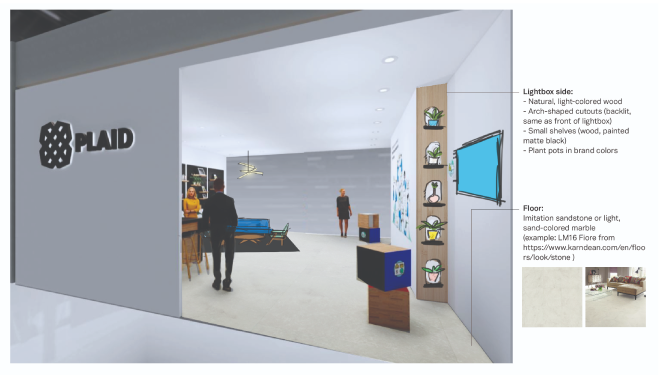
Qualitative and quantitative measures of success
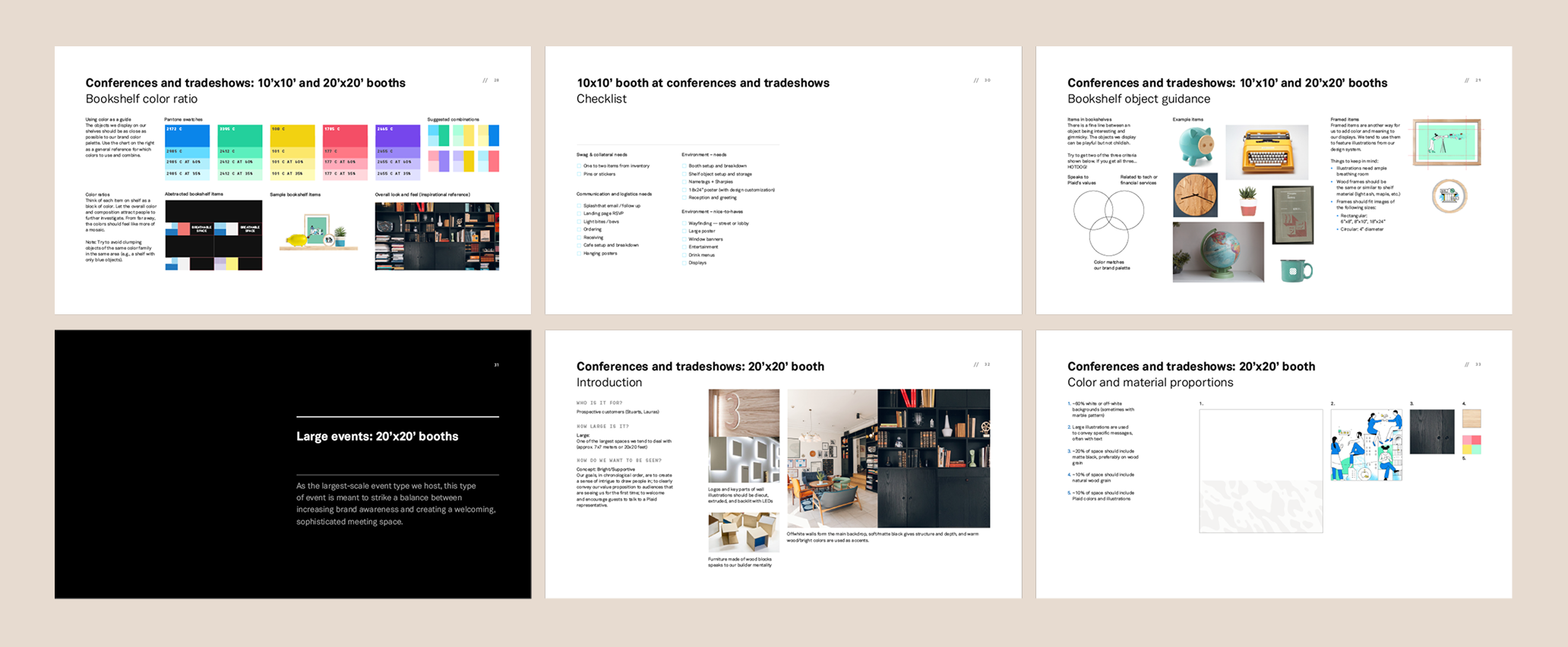
The booth drove 8,000+ impressions and 209 MQLs, reaching a key audience of executives and decision-makers at European fintechs. Qualitative feedback was strong—at least two competitors were spotted taking pictures of the space. On the design side, we came away with a concrete new chapter of event guidelines, upgrading what had previously been more hypothetical specifications into real, reusable standards.